Made in USA
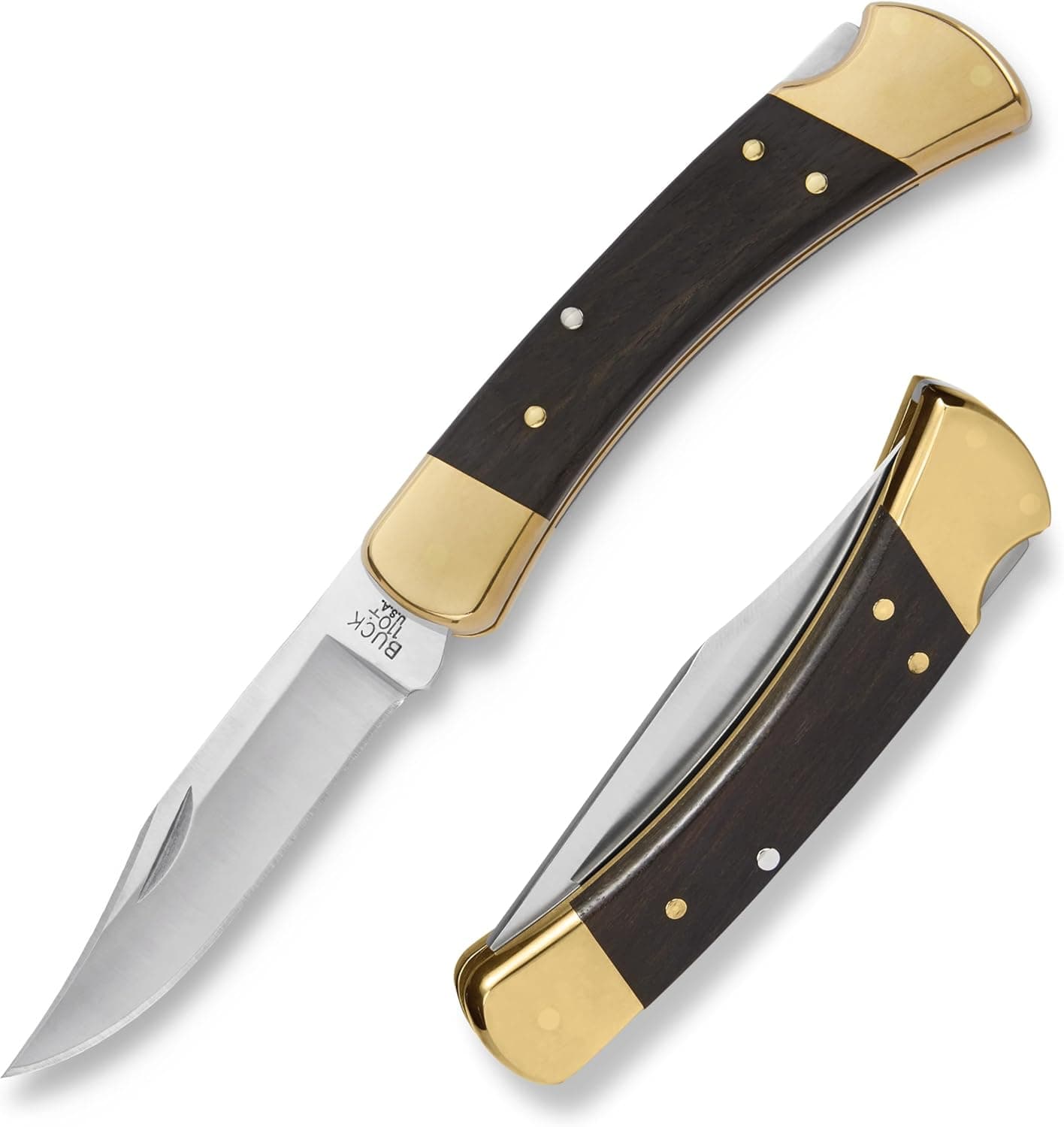
Buck 110 Folding Hunter Pocket Knife
Made in Post Falls, Idaho. The American pocket knife that's been on belt loops since 1964.
$64.99Check It Out
April 30, 2026 · 6 min read
There are thousands of folding knives and most of the specs sound like noise until you understand what they mean. Here's what actually matters, explained simply — so you can pick a knife you'll carry for years instead of one that sits in a drawer.
The steel is the most important spec on a knife and also the most confusing. Here's the short version: higher-end steels like CPM-S30V and S35VN hold an edge longer but are harder to sharpen at home. Mid-range steels like 420HC (Buck, Leatherman) and AUS-8 are easier to sharpen and still perform well for most uses. Budget steels like 3Cr13 and 5Cr15 dull quickly and don't hold an edge long enough for regular use. For most people, 420HC or AUS-8 is the sweet spot — good edge retention, easy to maintain at home.
The lock keeps the blade open during use. Lockback (used by Buck 110): strong, simple, time-tested — requires two hands to close. Liner lock: one-handed close, common on mid-range knives, reliable but not as strong as lockback under heavy use. AXIS lock (Benchmade): the smoothest one-handed operation available, very strong, ambidextrous. Frame lock: similar to liner lock but uses the handle frame itself — stronger and common on higher-end knives. For EDC and daily carry, AXIS or a good frame lock. For hunting and outdoor work, lockback is tried and true.
Most states allow blades up to 3–4 inches for everyday carry — but laws vary by state and city, so check yours. Practically: a 3–3.5 inch blade handles 95% of everyday tasks. Anything longer is more useful for hunting, camping, and field work. Anything under 2.5 inches starts to feel limited for anything beyond opening packages. The sweet spot for EDC is 3–3.5 inches.
Everyday carry knives are lighter, thinner, and optimized for one-hand use. You want something that doesn't feel heavy in your pocket after 8 hours. The Benchmade Bugout at 1.85 oz is one of the lightest quality EDC knives available. Hunting knives need a longer blade, stronger tip, and better handle grip for field dressing — the Buck 110 has been the standard here for 60 years. Work knives take abuse — opening boxes, cutting rope, scraping — and need tougher steel and a stronger lock than a lightweight EDC.
Made in Post Falls, Idaho. The American pocket knife that's been on belt loops since 1964.
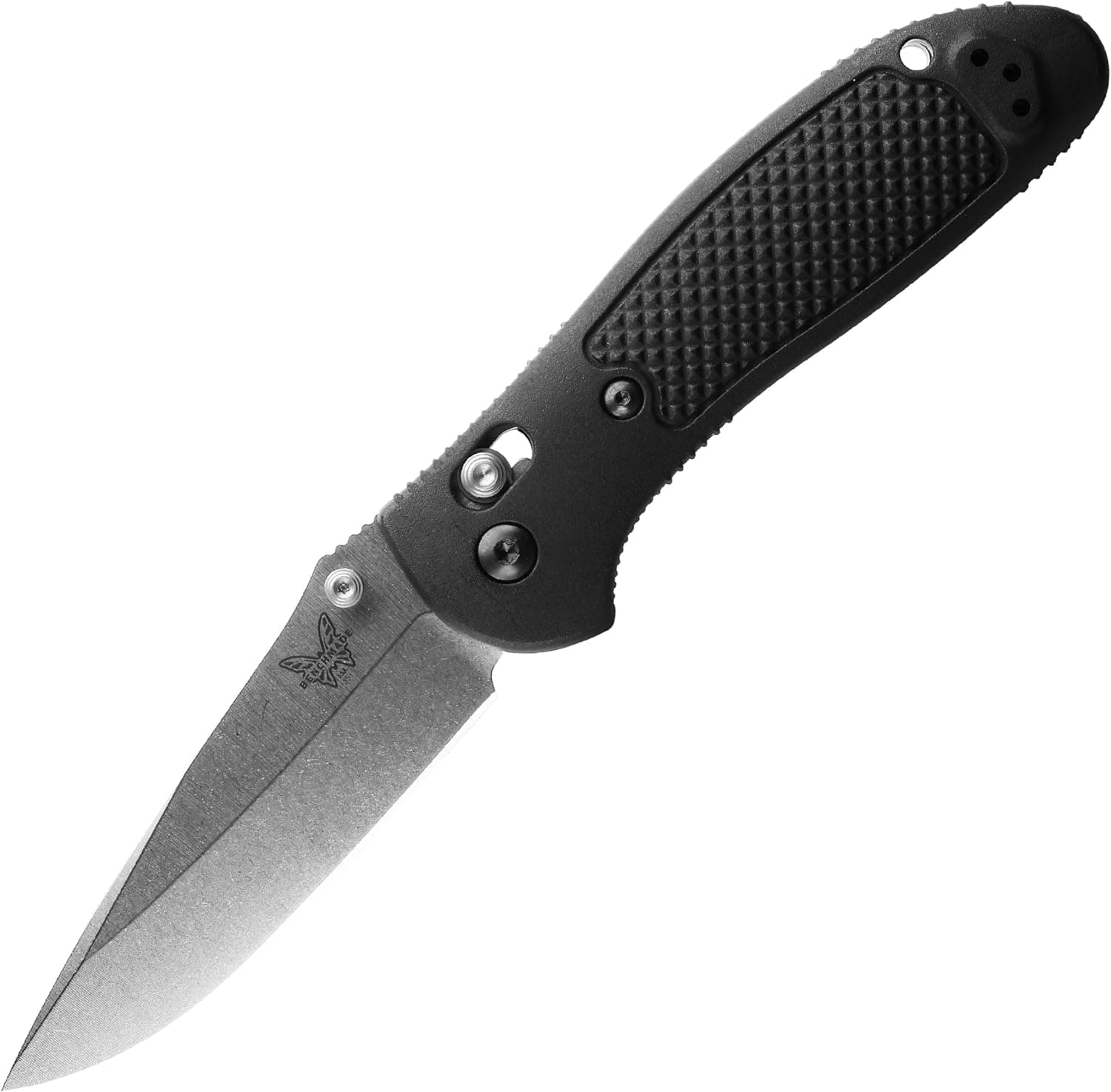
Made in Oregon City, Oregon. The folding knife that professionals carry every day.
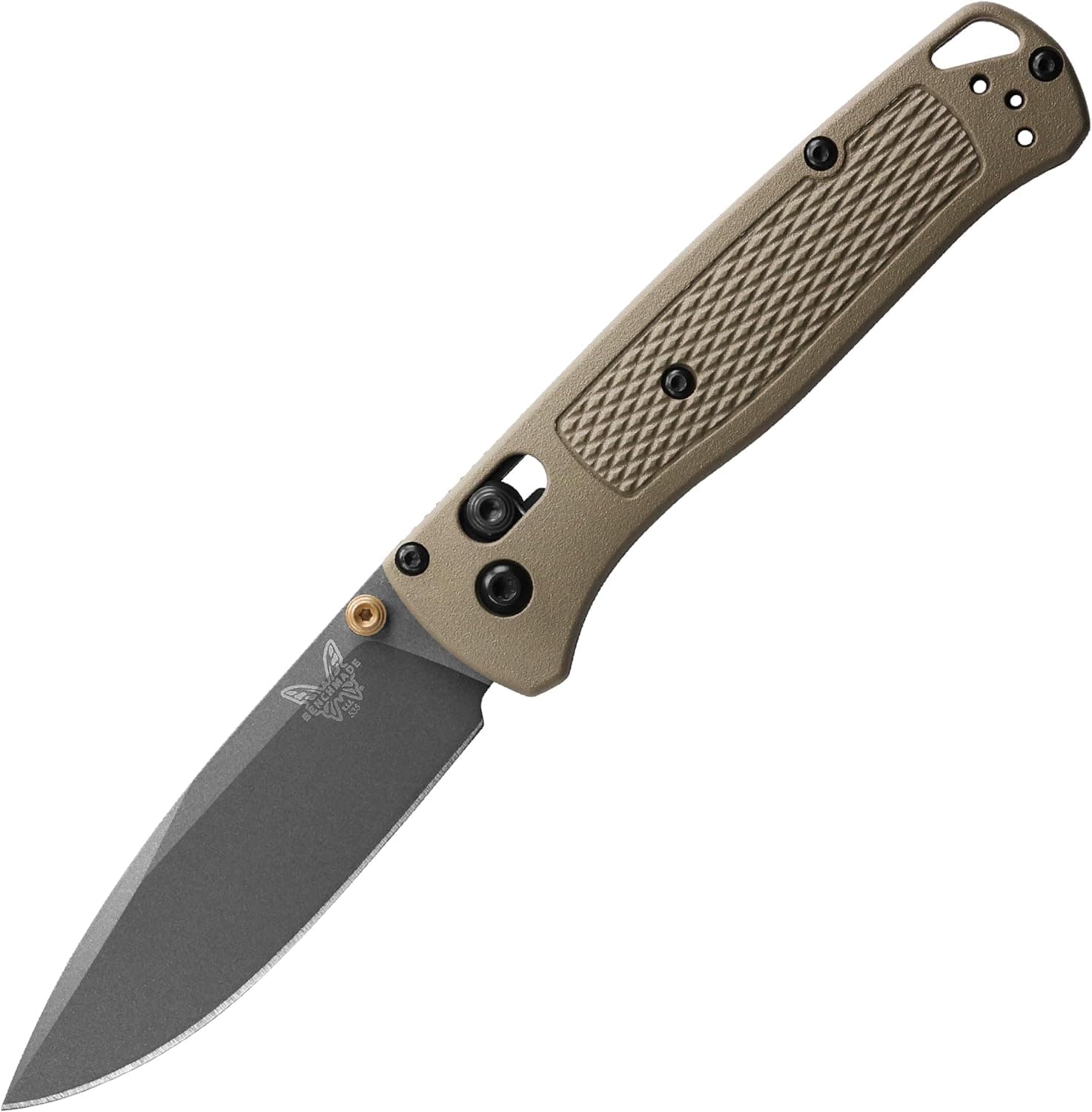
Made in Oregon City. 1.85 oz. The EDC knife hikers and minimalists obsess over.
SpangledStuff may earn a commission if you buy through links on this site, at no extra cost to you. Product prices and availability may change — always verify on the retailer's page before purchasing. Learn more